Berkeley Agentic AI + Advanced LLM Agents
Learn agents by the problems they solve, not by memorizing buzzwords.
Two public Berkeley courses converted into a problem-first study system: each video becomes a focused page with the core failure mode, solution pattern, visual model, practice drills, and frontier references.
Mental model
Agent capability stack
Click any video page when a node feels weak.
UC Berkeley CS294/194-196
Agentic AI MOOC Fall 2025

01 - 1:48:50
Agentic AI safety and security
Agents can take actions, so prompt injection, tool misuse, memory poisoning, and privilege escalation become operational risks.
securityprompt injectionguardrails
02 - 1:01:42
Autonomous embodied agents
Embodied agents must act in environments where observations are delayed, partial, and physically grounded.
embodimentRLworld models

03 - 58:58
LLM-era multi-agent systems
Classic multi-agent systems assumed explicit protocols; LLM agents communicate in flexible language but become harder to verify.
coordinationprotocolssystems

04 - 46:54
Deploying real-world agents
Real users expose edge cases that scripted demos never touch.
deploymentsupport agentssimulation

05 - 1:01:15
AI agents for science
Scientific discovery is a pipeline of literature search, hypothesis generation, experiment design, analysis, and iteration.
science agentspapersexperiments

06 - 44:04
Benchmark noise and evaluation
A model looks better or worse because the benchmark is noisy, not because the agent improved.
evalsstatisticsbenchmarks
07 - 54:49
Multi-agent AI
One model context is too narrow for broad, parallel, open-ended work.
multi-agentdelegationparallelism

08 - 1:04:37
Training agentic models
Base and chat models know language, but agentic work needs persistence, tool discipline, and recovery from failure.
post-trainingcurriculumtools
09 - 1:17:28
Post-training verifiable agents
Agents need training signals for long tasks, but many useful tasks do not have obvious step-by-step labels.
RLVRverifiersevaluation
10 - 1:19:31
Agent system design evolution
Agent prototypes work in demos but fail when state, tools, latency, retries, and deployment versions interact.
system designruntimeobservability

11 - 1:58:21
LLM agent foundations
A model can answer a prompt, but an agent must decide what to do next, which tools to use, and when to stop.
agent looptoolsorchestration
UC Berkeley CS294/194-280
Advanced LLM Agents MOOC Spring 2025

01 - 1:50:44
Safe and secure agentic AI
As agents gain tools and memory, security is no longer a prompt add-on; it is architecture.
safetymemory poisoningprivilege
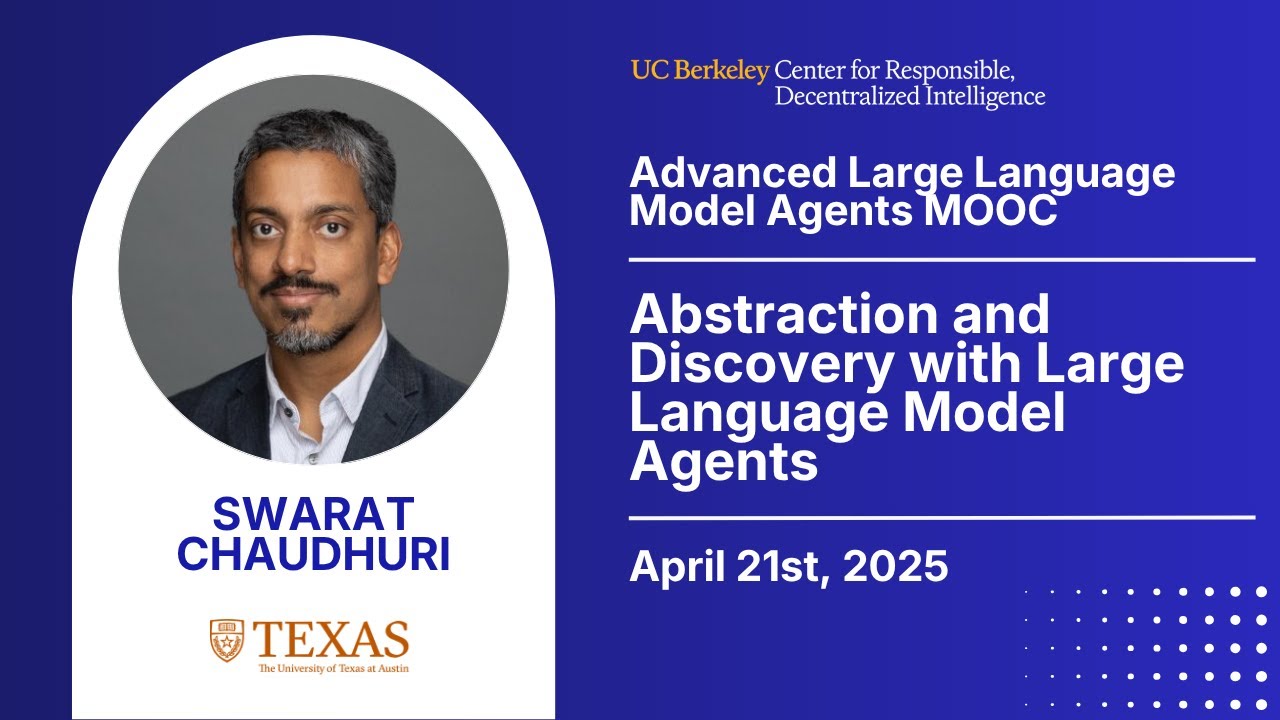
02 - 1:27:38
Abstraction and discovery
Agents should not only solve one task; they should discover reusable abstractions that compress future tasks.
abstractiondiscoveryconcept libraries

03 - 1:12:12
Informal plus formal math reasoning
A complete proof often needs informal planning before formal verification.
proof sketchesformal verificationmath agents

04 - 52:07
Autoformalization and theorem proving
Human math is informal; proof assistants require exact formal statements and tactics.
autoformalizationLeanretrieval

05 - 1:14:08
AlphaProof and formal math
Natural-language math reasoning is fragile; formal systems can verify proofs but are hard to search.
formal mathRLverifiers

06 - 1:28:21
Perception to action
Computer-use agents must operate across real operating systems, not only benchmark websites.
computer usevision agentsOSWorld
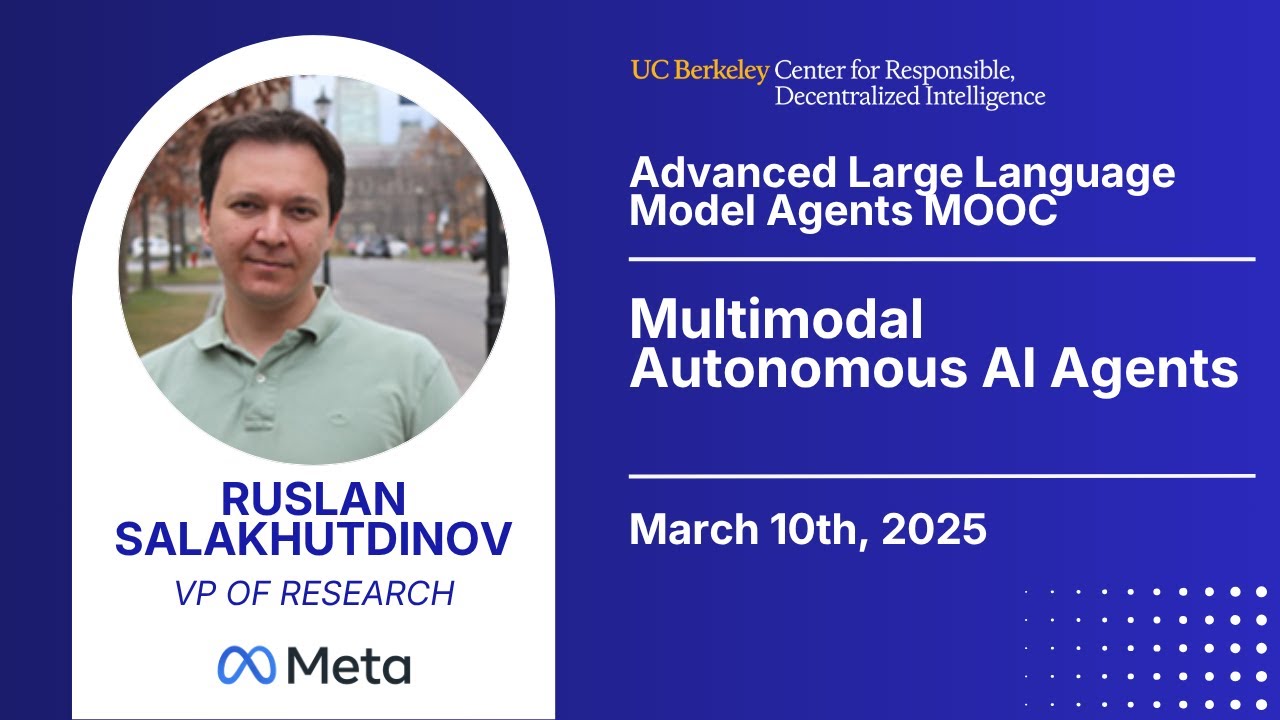
07 - 1:17:42
Multimodal autonomous agents
Web and GUI tasks require seeing layout, reading text, choosing actions, and recovering from UI changes.
web agentsmultimodalbenchmarks
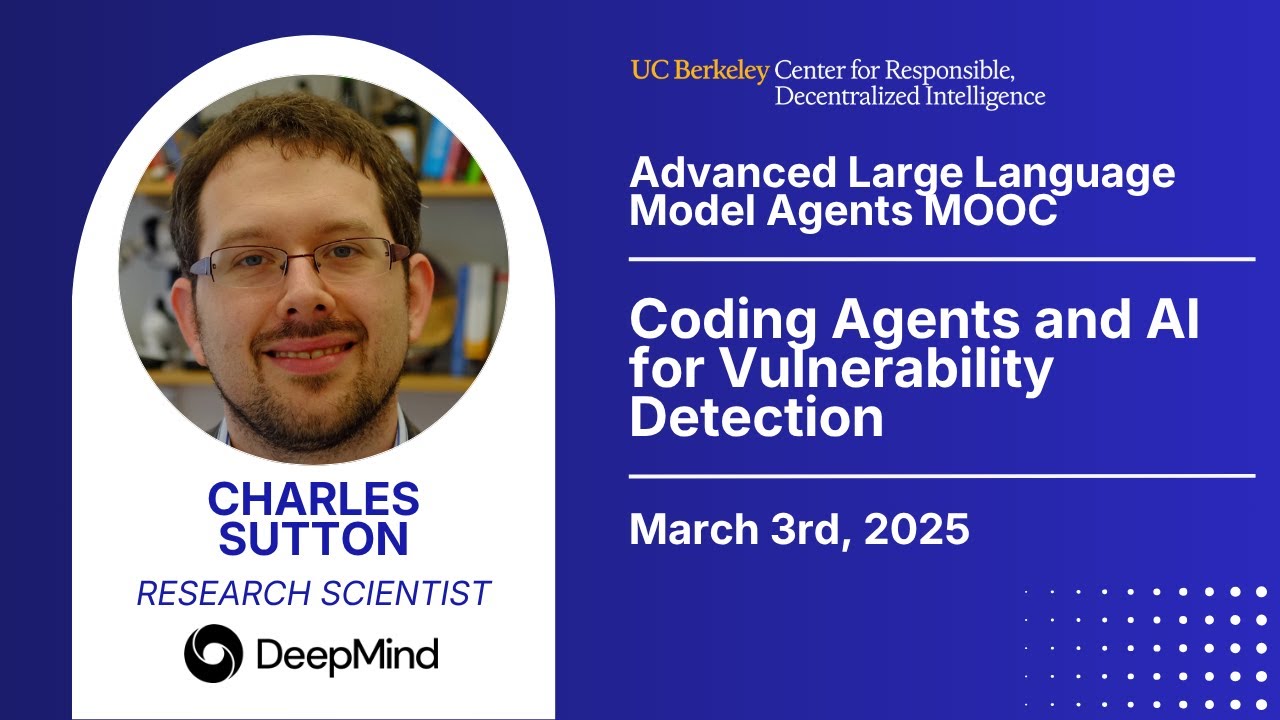
08 - 1:27:02
Code agents and vulnerability detection
Security bugs hide across files, execution paths, and tool outputs; static prompting misses them.
code agentssecuritytools

09 - 1:20:53
Open training recipes
Open models need reproducible paths to reasoning without secret proprietary data.
open modelspost-trainingdata

10 - 1:32:39
Memory and planning
Agents forget, repeat work, or plan against a false model of the environment.
memoryplanningRAG

11 - 1:16:47
Learning to reason with LLMs
Reasoning behavior must be trained or elicited without simply teaching the model to produce longer text.
reasoningDPOverification
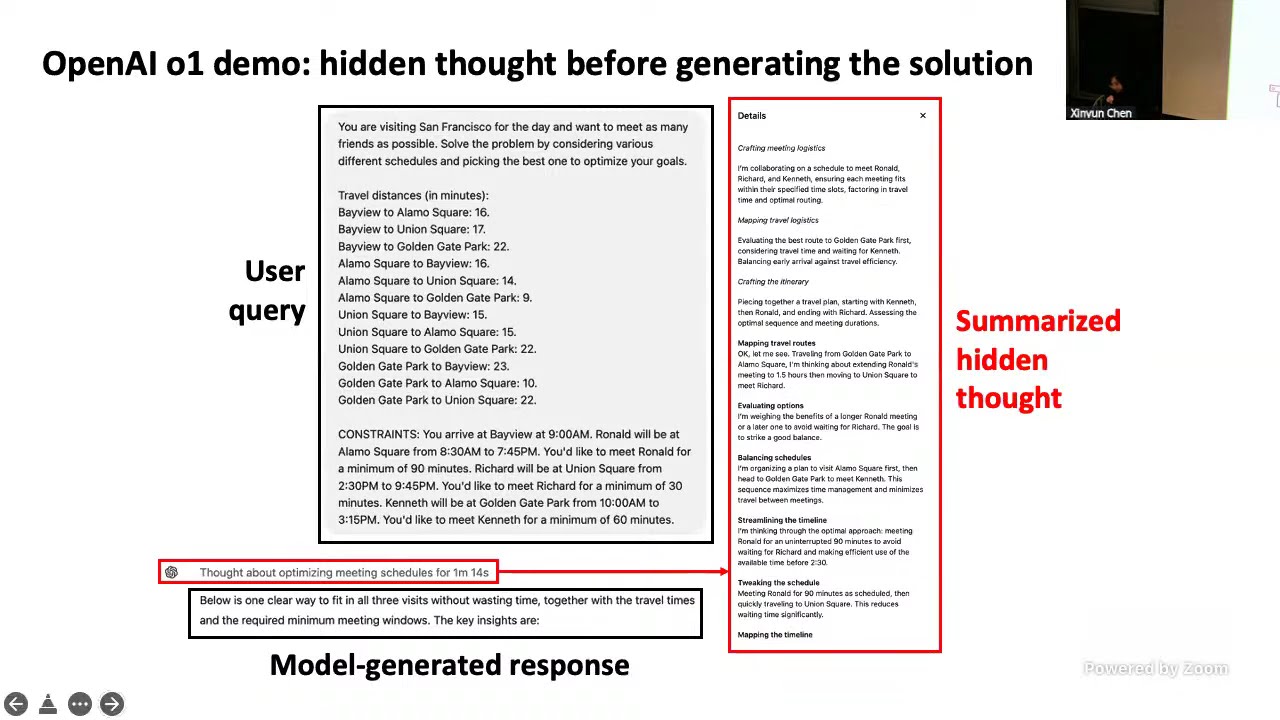
12 - 1:21:32
Inference-time reasoning
Some tasks need search at inference time because one sampled chain is fragile.
reasoningsearchself-debug